Eco-School
Learning to care for the planet, starting with our own school.
We are part of the Community of Madrid Eco-Schools network, an international environmental education programme that turns the school itself into a place to learn about, practise and improve how we care for our surroundings. And for many years now, the Green Flag has flown at our school.
7
steps
the Eco-Schools methodology
1
Green Flag
proudly flown for many years
FEE
international network
Foundation for Environmental Education
100%
school community
students, teachers and families
Environmental education
What is an Eco-School?
Eco-Schools is a programme of the Foundation for Environmental Education (FEE), coordinated in Spain by ADEAC (Association for Environmental and Consumer Education). The idea is simple: the best way to learn to care for the environment is to start with the place where we spend every day. Students take the lead: they spot what can be improved at school, propose solutions and put them into practice together with teachers and families.
International recognition
We fly the Green Flag
The Green Flag is the award the programme grants to schools that successfully apply its methodology and show real improvement in how the school manages its environmental impact.
At Los Robles we have held it for many years, and we keep it thanks to the daily commitment of the whole school community: something to be proud of, and a responsibility too.
How we work
The 7 steps of an Eco-School
All eco-schools share the same methodology, which turns good intentions into improvements that can be measured.
- 1Eco-Committee Students, teachers, families and school staff come together to drive the project.
- 2Environmental review We look at how the school uses water, energy and waste, so we know where we are starting from.
- 3Action plan Based on that review, we set specific goals and the actions to achieve them.
- 4Monitoring and evaluation We measure our progress and adjust course when needed.
- 5Curriculum work Environmental education is built into different subjects and year groups.
- 6Informing and involving We share what we do with the whole school community and our surroundings.
- 7Eco-Code A set of commitments, written by the students, that we all pledge to follow.
Eco-School in action
United against litter in nature
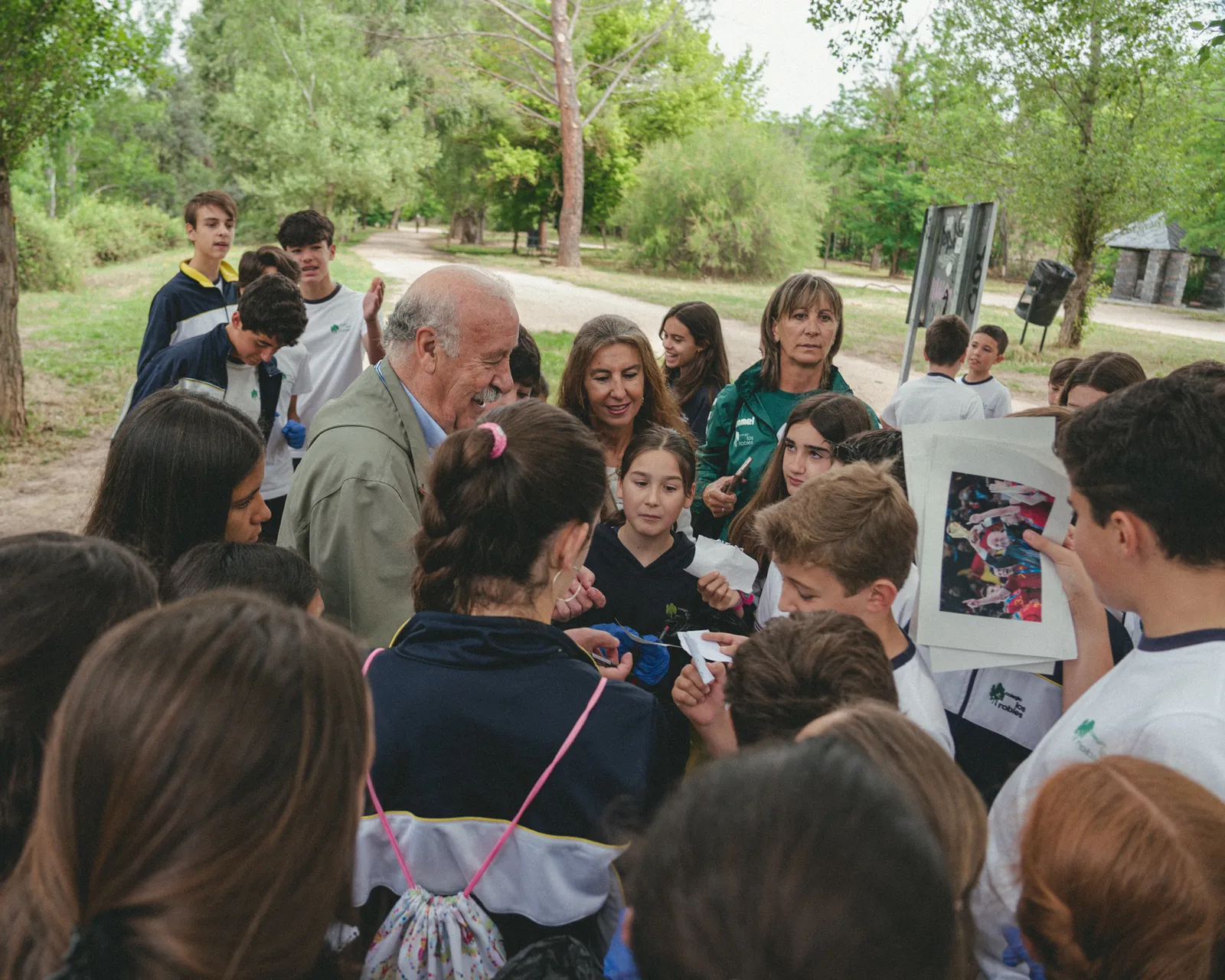
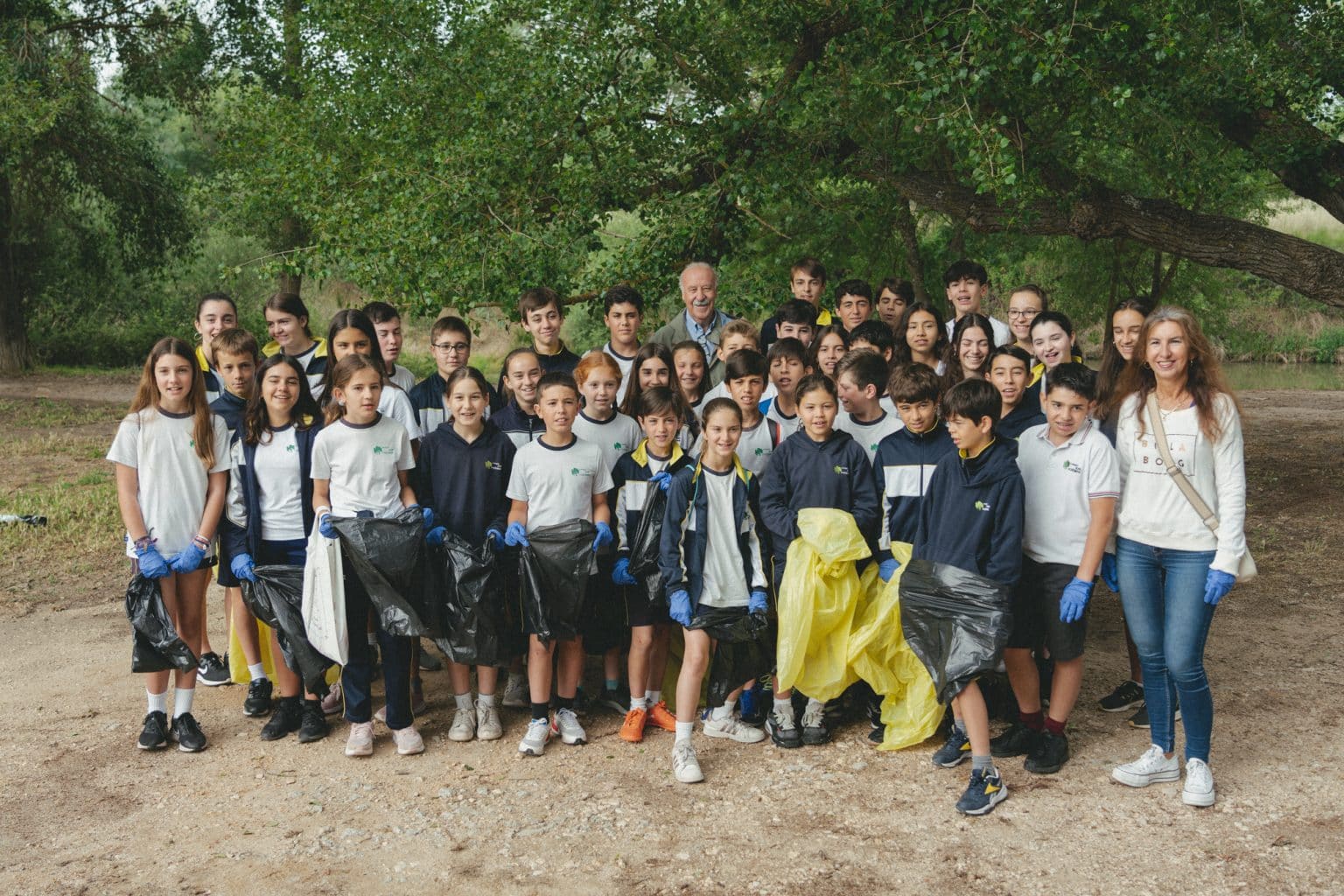
As a member of the Eco-Schools network that promotes the values of sport, our school was selected to take part in the Libera project. Our students collected litter in the El Pardo woodland together with the project's ambassador, Vicente del Bosque.