
Science Outreach
Real science, hands-on.
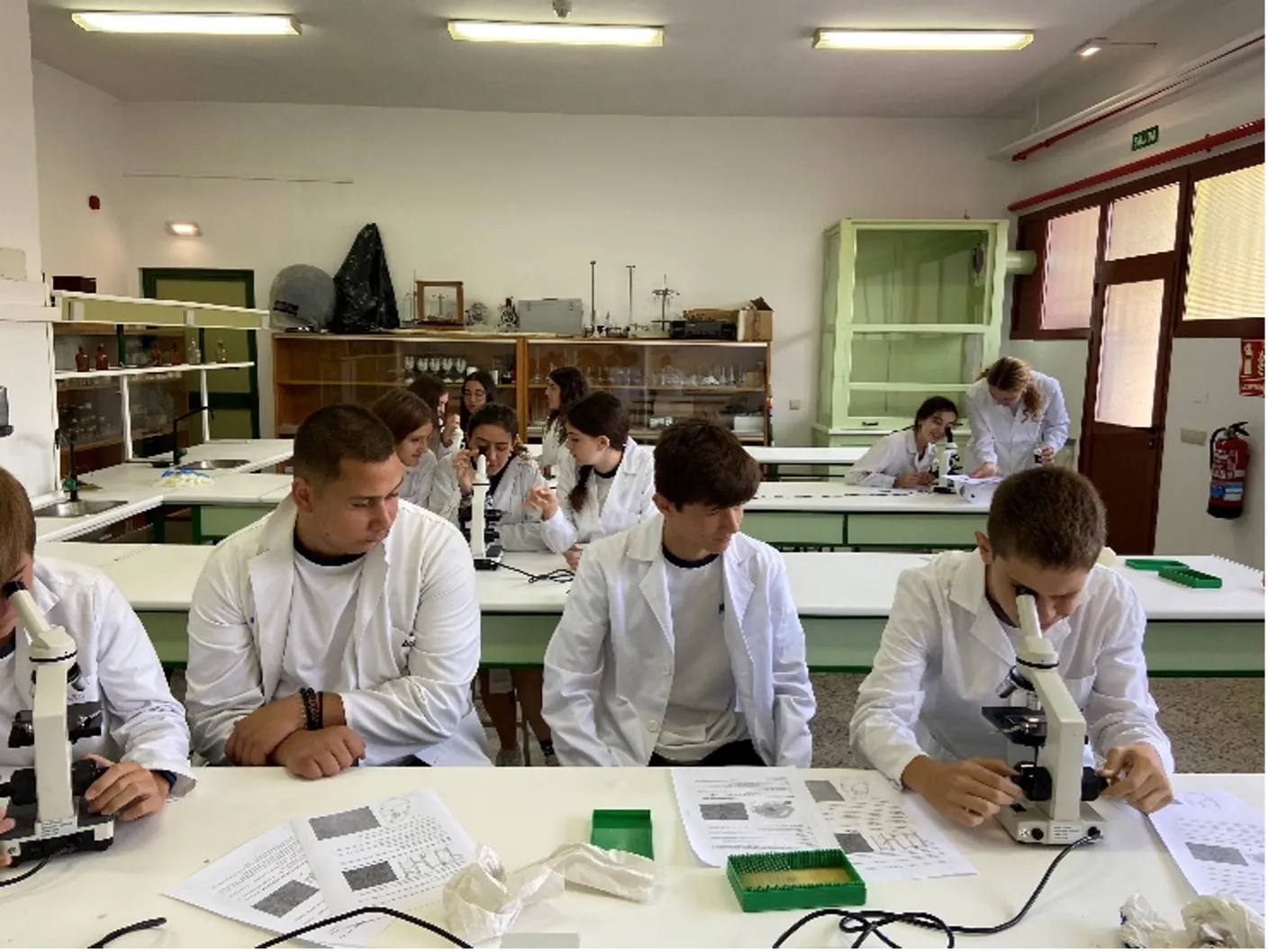
Science Outreach is our lab practicals project, designed to spark students' curiosity and reinforce what they learn in class by testing it against reality. From 4th year of Primary to 4th year of Secondary, our students get closer to scientific methodology in our lab.
4th Primary
starting year
first lab practicals
4th ESO
final year
the project runs throughout the stage
100%
hands-on
always in the school's lab
1
dedicated lab
equipped with scientific material
How we work
The scientific method, step by step
Every practical follows the same path as any scientist: observe, ask questions, test it experimentally and draw conclusions.
- 01 Observe They start from an everyday phenomenon and look closely at the details: what happens, and why it stands out.
- 02 Ask and hypothesise They connect it to what they've learned in class and propose an explanation that will later need to be tested.
- 03 Experiment They design and carry out the lab practical with real equipment: microscopes, reagents, dissections.
- 04 Conclude and discuss They compare the result with their initial hypothesis and share it with the rest of the group.
How we live it
From the Secondary lab to the Primary workshop
In Secondary the project moves into the lab, with microscopes and dissection practicals. In Primary it's introduced through simple experiments and everyday materials that spark the same curiosity from an early age.


Why?
What our students achieve
Scientific curiosity
Sparks an interest in understanding the "why" of things, beyond the textbook.
Critical thinking
Students learn to test a hypothesis against reality instead of simply taking it for granted.
Teamwork
Practicals are done in pairs or groups: everyone contributes, and conclusions are drawn together.
Lab skills
They handle microscopes, dissection equipment and reagents with the confidence of someone who's done it before.
STEM vocation
Brings scientific and technical careers closer from an early age, with examples students can get their hands on.